
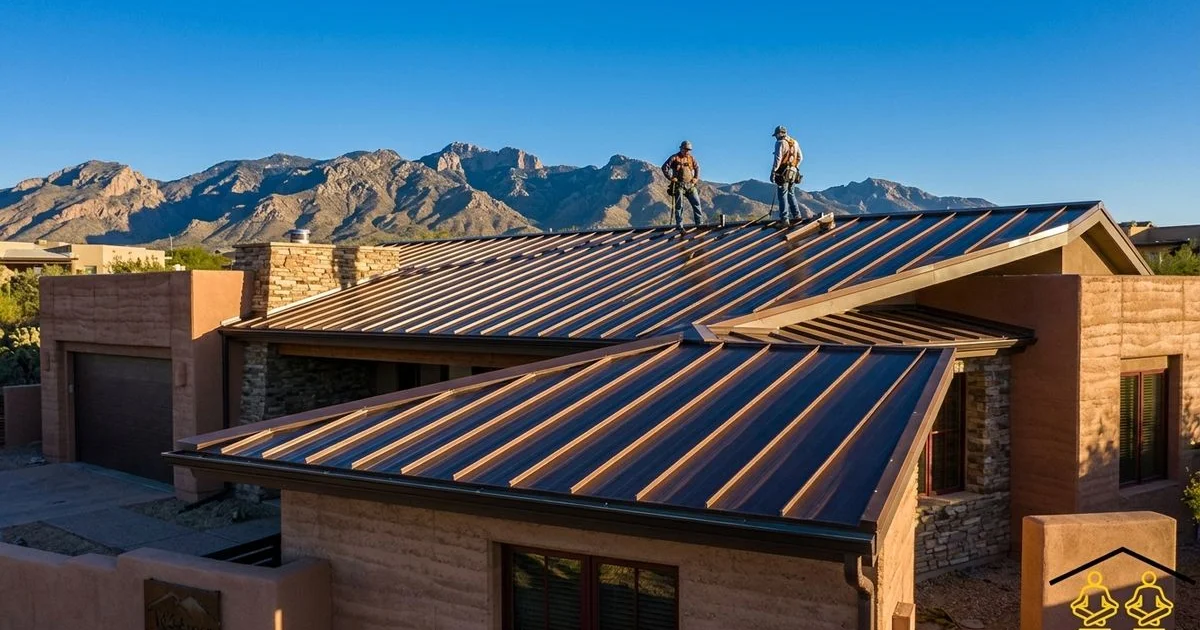
You know how brutal a Tucson summer gets on your home. When temperatures consistently top 110 degrees, your roof absorbs a massive amount of radiant heat. Traditional asphalt shingles soak up that solar energy and dump it right into your living room.
This thermal transfer forces your air conditioner to work overtime. It drives up your monthly utility bills and significantly shortens the lifespan of your shingles.
Our team has seen this cycle force homeowners into premature roof replacements year after year.
That is exactly why upgrading to metal roofing has become such a popular, permanent solution.
Let us look at the hard data behind desert roofing materials, explore the actual cost savings, and walk through the specific options that work best in Southern Arizona.
Why Metal Roofing Excels in Desert Climates
Metal roofs actively reflect solar radiant heat instead of absorbing it like a giant sponge. Studies from the Oak Ridge National Laboratory confirm that a properly coated metal panel can reflect up to 70 percent of incoming solar energy. This impressive reflectivity prevents excess heat from baking your attic space.
Our crews frequently measure attic temperatures during July installations. Asphalt-covered attics easily reach 150 degrees, while attics under reflective metal stay significantly cooler. That massive temperature difference directly impacts how hard your HVAC system runs.
Asphalt Versus Metal in Tucson Sun
| Feature | Traditional Asphalt Shingles | Premium Metal Roofing |
|---|---|---|
| Heat Absorption | Extremely high (soaks up heat) | Very low (reflects up to 70%) |
| Average Tucson Lifespan | 12 to 15 years | 40 to 70+ years |
| Thermal Expansion | Causes cracking and curling | Panels glide on concealed clips |
| Attic Temperature Impact | Increases heat load significantly | Reduces heat transfer |
The secret lies in advanced finish technology. Modern architectural panels utilize Kynar 500 or Hylar 5000 resin-based coatings. These specific finishes contain reflective pigments that bounce UV rays back into the atmosphere. Applying roof coatings can further boost this reflective performance.
Traditional asphalt simply cannot survive this daily thermal cycling. Searing daytime heat followed by cool desert nights causes standard shingles to rapidly expand and contract. This constant movement leads to micro-cracking, granule loss, and a surprisingly short lifespan in the Sonoran Desert.
Energy Efficiency That Pays for Itself
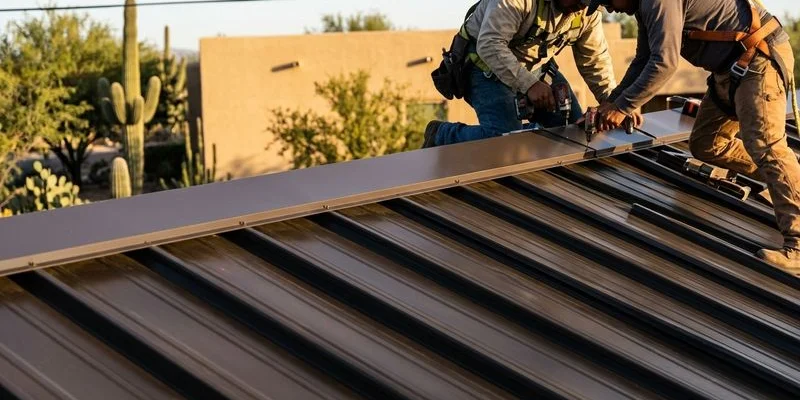
The financial advantage of a reflective roof becomes incredibly obvious during a Tucson summer. Switching from dark asphalt to a light-colored or cool-coated metal system typically drops cooling costs by 20 to 40 percent. Those percentage points represent substantial cash savings when July utility bills routinely exceed 400 dollars.
We routinely hear from clients who see their monthly Tucson Electric Power (TEP) bills drop by 50 to 80 dollars after an installation. Cool-roof rated products feature specialized paint systems designed for maximum thermal emittance. These coatings easily meet strict Energy Star requirements for energy efficiency.
Certain highly reflective profiles may even qualify for local utility rebates or federal tax credits under the 2026 guidelines. To maximize your return on investment, you should consider a few key factors:
- Color Selection: Lighter shades like bare Galvalume or white provide the highest solar reflectance index (SRI).
- Ventilation: Proper ridge and soffit venting enhances the cooling effect of the metal panels.
- Insulation Integration: Adding rigid foam insulation during installation further blocks thermal transfer.
- Existing Decking: Panels can often be installed directly over existing shingles, which saves money on tear-off labor.
While initial material costs are higher than standard shingles, the long-term math heavily favors metal. You combine decades of energy savings with a 50-year lifespan to create a system that easily pays for itself. Most Southern Arizona homeowners reach their break-even point within 7 to 12 years.
Durability That Withstands Monsoon Season
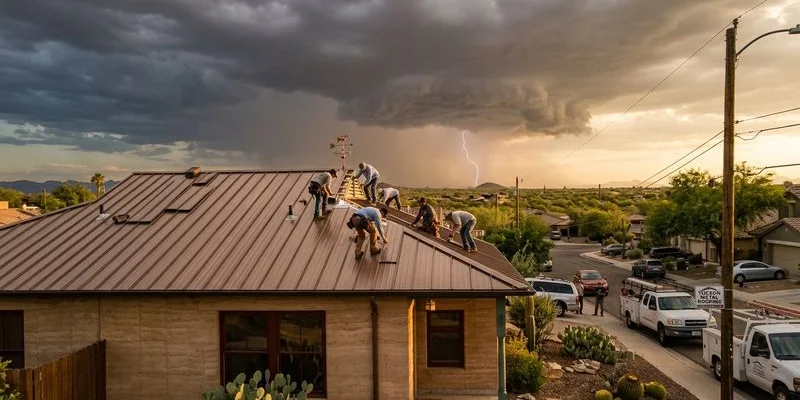
Late summer monsoon storms bring a unique set of destructive forces to our region. Tucson regularly experiences microbursts with violent wind gusts exceeding 70 miles per hour. These sudden storms tear traditional shingles right off the decking and leave homes exposed to heavy downpours.
Our preferred standing seam metal systems are engineered to withstand wind speeds up to 140 miles per hour. These premium profiles interlock securely along raised vertical seams.
Because the fasteners are completely concealed beneath the metal, there are no exposed screws or rubber washers to degrade in the sun. This hidden-fastener design completely eliminates the most common sources of wind uplift and water intrusion.
Why a Class 4 Impact Rating Matters
Hail is another serious threat during July and August storms. Quality architectural metal carries a Class 4 impact rating, which is the highest durability standard in the roofing industry. This impressive rating means the material has survived extreme laboratory testing.
Steel panels can take direct hits from simulated hailstones up to two inches in diameter without fracturing. The protective coating might show a minor cosmetic dent, but the roof will not leak or fail.
Many major insurance providers reward this level of protection. Companies like State Farm and Farmers often provide premium discounts ranging from 10 to 25 percent for homes equipped with Class 4 impact-resistant systems. You should always consult your local insurance agent to verify exact discount percentages for your specific zip code.
Low Maintenance in a Harsh Environment
Desert living is tough on exterior building materials. Concrete tiles inevitably crack under thermal shock, asphalt shingles lose their protective granules, and flat foam roofs require expensive recoating every five years. Metal panels bypass almost all of these frustrating maintenance cycles.
We recommend a simple roof inspection once a year to ensure your roof remains in peak condition. You simply need to clear away accumulated desert dust, mesquite leaves, and random debris from the valleys and gutters.
Pro Tip: A quick rinse with a standard garden hose every few months is usually enough to keep the factory paint finish looking brand new and reflecting sunlight efficiently.
Organic growth is completely eliminated with a steel or aluminum system. Algae and moss cannot take root on a slick metal surface, which keeps your home looking pristine.
Pest resistance provides another major advantage for Tucson properties. Destructive pests like termites and roof rats cannot chew through 24-gauge steel to access your attic. The factory-applied finishes are also remarkably durable, often carrying 30 to 40-year manufacturer warranties against severe fading and chalking.
Aesthetic Options for Every Home Style
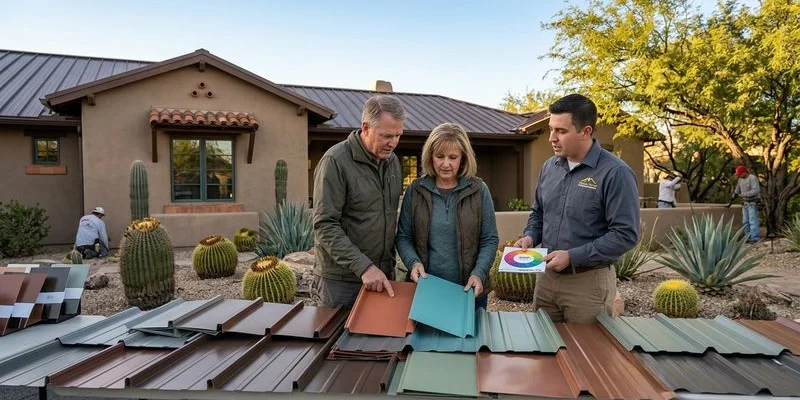
Many people still associate metal roofs with rusty agricultural barns or cheap commercial warehouses. Modern manufacturing has completely revolutionized the visual appeal of residential steel. Today, you can select from dozens of sophisticated profiles and custom colors designed to elevate your property value.
Our design consultants match specific profiles to the unique architectural styles found throughout Pima County. Here are the most popular options for Southern Arizona architecture:
- Standing Seam: Features clean vertical lines perfect for modern desert contemporary and mid-century designs.
- Metal Tile: Replicates the classic look of Spanish clay tile without the extreme weight or fragility.
- Stone-Coated Steel: Blends the textured appearance of architectural shingles with the rigid durability of metal.
- Corrugated Panels: Offers a rustic aesthetic popular for custom Southwestern and ranch-style builds.
Whatever your personal taste requires, there is a specialized metal roofing product engineered to match perfectly. You never have to sacrifice curb appeal to gain superior energy efficiency.
Environmental Sustainability
Building a sustainable home requires selecting materials with a responsible lifecycle. Traditional asphalt shingles are incredibly wasteful, contributing an estimated 11 million tons of toxic petroleum-based debris to US landfills annually. Choosing a permanent steel solution breaks this damaging cycle of constant replacement and disposal.
We proudly install products manufactured with a high percentage of post-consumer materials. Most modern steel panels contain anywhere from 25 to 95 percent recycled metal right out of the factory.
The Lifecycle of Desert Roofing
When a steel roof finally reaches the end of its 60-year lifespan, the entire system is 100 percent recyclable. The material can be melted down and repurposed indefinitely without losing its structural strength.
Your daily environmental impact drops significantly as well. By drastically lowering your summer cooling demands, you reduce the strain on the local power grid. Less electricity consumed means fewer greenhouse gases emitted by regional power plants, making your home a cleaner, greener part of the community.
Is Metal Roofing Right for Your Tucson Home?
Upgrading your property is a major financial decision that requires careful thought. If you plan to stay in your current house for more than five years, a permanent steel system is one of the smartest upgrades you can execute.
We specialize in custom metal roofing installations and have successfully protected hundreds of local families.
The specific challenges of intense thermal movement and violent monsoon winds require specialized local knowledge.
Ready to secure your home with a permanent, energy-efficient solution?
Call Tucson Roof Gurus at (520) 775-0388 to schedule your free consultation today.
We will gladly inspect your current setup, discuss your specific aesthetic goals, and provide honest guidance backed by 25 years of local contracting experience.
Related Service
Learn more about our professional services related to this topic.
View Our Metal Roofing Service →
Kevin Bayes
Owner & Licensed Roofing Contractor
Owner of Tucson Roof Gurus with 25+ years of desert roofing expertise.