
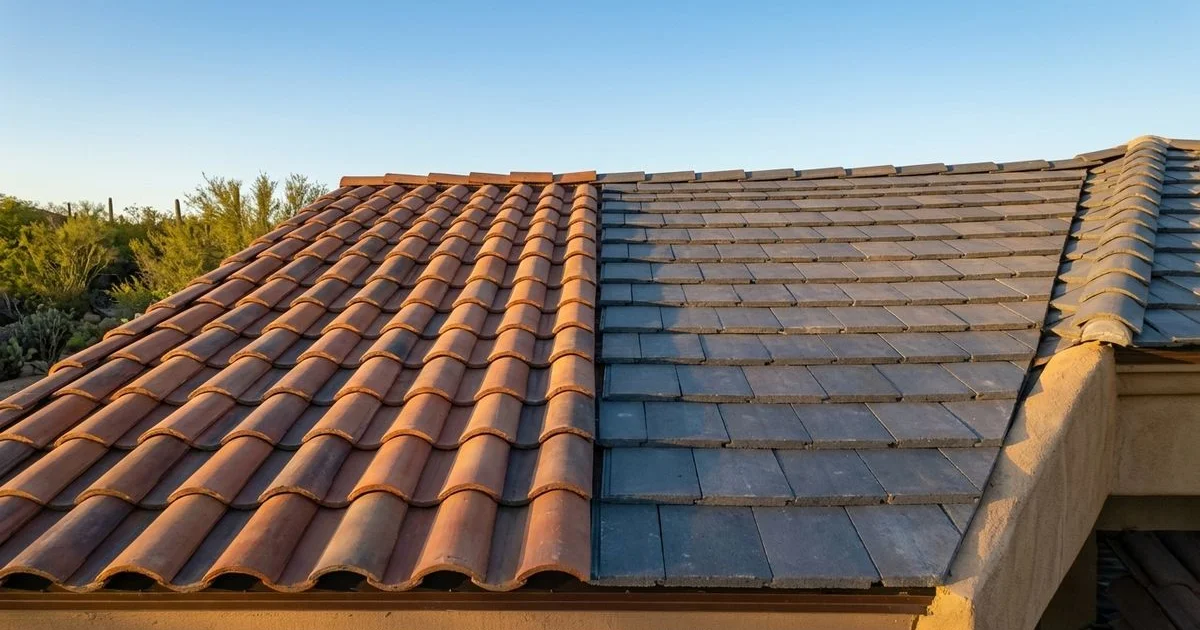
You can drive through the Catalina Foothills and instantly spot the difference between a 20-year-old roof and a 50-year-old one just by looking at the color. That chalky, faded look is the telltale sign of aging materials under the intense Arizona sun.
We see this every day at Tucson Roof Gurus when homeowners ask us to evaluate an aging tile roof. The decision usually comes down to a choice between these two classic materials.
Both options offer incredible durability for the desert climate. When homeowners ask us about Clay vs Concrete Tile Roofing: Which Is Better for Tucson?, the conversation always circles back to balancing immediate budget goals with long-term performance.
Let’s look at the current 2026 data, break down the actual performance differences, and outline the exact factors that should guide your decision.
Understanding Clay Tile Roofing
Clay tile has been used as a roofing material for thousands of years, and the manufacturing science has only improved. It is made from natural earth that is shaped and fired in kilns at extremely high temperatures. This firing process creates a dense, hard material that naturally resists fading, fire, and rot.
Here are the defining characteristics of premium clay tiles:
- ASTM C1167 Grade 1 Certification: Ensures maximum density and minimal water absorption.
- Lightweight Profile: Weighs only 600 to 900 pounds per square.
- Color Permanence: Fired natural earth will not fade under UV exposure.
Our team frequently installs premium products from manufacturers like MCA and Ludowici for high-end Tucson projects. These top-tier materials meet strict ASTM C1167 Grade 1 standards. This specific certification means the tiles have a water absorption rate of less than 6 percent, making them nearly impervious to monsoon moisture.
In Tucson, clay is the traditional choice for Spanish Colonial, Mission Revival, and Mediterranean-style homes. The warm terra cotta tones complement the Sonoran Desert landscape beautifully. High-end glazed finishes are also available for vibrant colors and an extra layer of weather protection.
Weight is a crucial factor for older framing systems. Clay is significantly lighter than concrete, typically weighing 600 to 900 pounds per roofing square (100 square feet). This lower weight puts less structural demand on your house, which creates a major advantage for mid-century homes not originally engineered for massive loads.
Understanding Concrete Tile Roofing
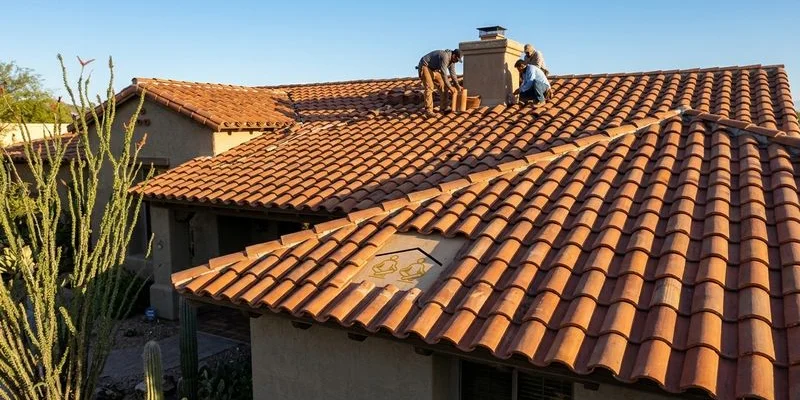
Concrete tile is manufactured from a precise mix of Portland cement, sand, and water that is molded under pressure and cured. Color is either applied as a surface coating or mixed throughout the tile body (known as through-body color). Manufacturers can mold this material into virtually any shape, closely replicating the look of natural barrel styles or flat slate.
Modern concrete tile features include:
- Through-Body Color: Pigment mixed throughout the tile for better, longer-lasting wear.
- High-Mass Durability: Weighs 900 to 1,200 pounds per square for superior wind resistance.
- Cool Pigment Technology: Reflects infrared heat to improve home energy efficiency.
We install a massive volume of concrete tiles from industry leaders like Eagle Roofing Products and Newpoint Concrete Roof Tile. These modern manufacturers incorporate “Cool Pigments” directly into the concrete mix. These specialized colorants reflect invisible infrared light, significantly boosting the tile’s Solar Reflectance Index (SRI) to keep your attic cooler.
Concrete gained enormous popularity in Tucson during the housing booms of the 1980s and 1990s. Entire subdivisions in Rita Ranch, Oro Valley, and Dove Mountain were built exclusively with these roofs. Today, it remains the most common roofing material on homes built within the last 40 years.
You must verify your home’s structural support before choosing this material. Concrete weighs between 900 and 1,200 pounds per roofing square. While standard in modern construction, older properties may require structural reinforcement, though manufacturers do offer lightweight alternatives around 720 pounds per square if weight is a concern.
2026 Cost Comparison
Cost is often the deciding factor for Tucson homeowners choosing between these two premium materials. Pricing has shifted recently, so looking at up-to-date 2026 figures is essential for accurate budgeting.
We always advise clients to consider both the material price and the specialized labor required for installation. The price difference primarily stems from manufacturing costs, as kiln-fired earth requires significantly more energy than cured cement.
Upfront Installation Costs
Here is a breakdown of average 2026 installation costs for a standard 2,000-square-foot roof in the Tucson market:
| Roofing Material | Average Cost Per Square Foot | Total Estimated Cost (2,000 sq ft) |
|---|---|---|
| Concrete Tile | $10.00 to $18.00 | $20,000 to $36,000 |
| Standard Clay Tile | $15.00 to $25.00 | $30,000 to $50,000 |
Concrete tile clearly serves as the more budget-friendly option. This estimate includes the complete tear-off of your old roof, structural verification, new underlayment, and the tile installation.
Clay tile remains the premium architectural choice. Imported European lines or handmade artisan varieties from companies like Antique Tile can push the upper end of these costs even higher.
Durability and Lifespan in Arizona
Both options offer exceptional longevity in the dry climate, but the actual tiles are only part of the system. The secret that many roofers fail to mention is that your roof is only as waterproof as the underlayment hiding beneath it.
Pro Tip: In the intense Tucson heat, the waterproof underlayment beneath your tiles typically fails after 20 to 30 years. You will need a “lift and relay” procedure to replace this barrier long before the actual tiles wear out.
Our repair crews constantly see underlayment deteriorate decades before the actual tiles break down. Once this barrier fails, water can reach your roof deck.
Comparing Tile Lifespans
Clay tile stands as the absolute longevity champion. Quality installations routinely last 80 to 100 years or more in the Arizona desert. The fired material remains entirely stable and does not degrade from UV exposure. The color maintains its original vibrancy indefinitely because the hue is inherent to the earth itself.
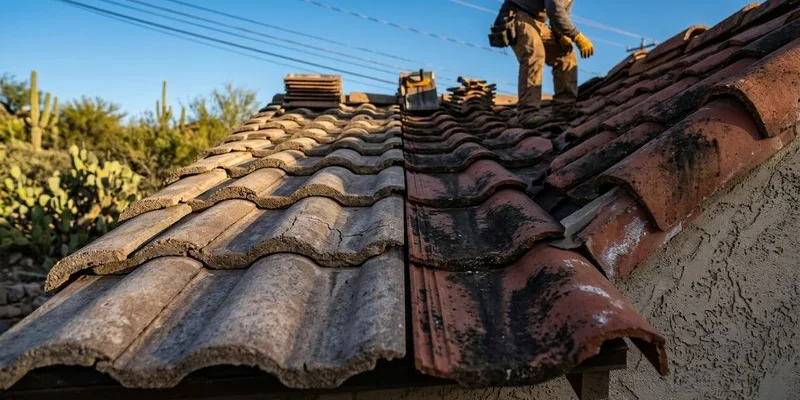
Concrete tile provides an expected lifespan of 50 to 60 years in the climate. While this easily outperforms asphalt shingles, the cement will show its age over time. Surface coatings gradually weather away under intense UV radiation, causing darker colors to lighten and appear slightly chalky.
This color change is strictly cosmetic rather than structural. Concrete is also more porous, meaning it absorbs slightly more moisture during heavy monsoon downpours. The dry desert air causes rapid evaporation, but this repeated wet-dry cycling eventually contributes to minor surface erosion.
Performance in Extreme Heat
Both styles provide superb thermal performance to combat Tucson’s relentless summer heat. The physical air space created beneath barrel-shaped tiles acts as a natural insulating layer, drastically reducing heat transfer directly to the roof deck.
This built-in ventilation channel can lower your summer cooling costs by 15 to 25 percent compared to flat asphalt shingles. The two materials manage heat quite differently based on their density.
Clay maintains a slight edge in natural thermal performance due to its lower thermal mass. The material heats up and cools down relatively quickly. This means it begins releasing stored heat back into the atmosphere much sooner in the evening, allowing your home to cool down faster once the sun sets.
Concrete features a significantly higher thermal mass. It absorbs a tremendous amount of heat during the day and holds onto it longer into the night. This slow release can potentially keep your attic warmer during the critical early evening hours when your air conditioning system is working its hardest.
The Solar Reflectance Index (SRI) Advantage
To maximize your energy savings, you should prioritize products with a high Solar Reflectance Index (SRI).
- Color Over Material: A light-colored concrete with reflective cool pigments will easily outperform a dark, traditional terra cotta color.
- The SRI Rating: This number measures how well a surface rejects solar heat. Higher numbers mean a cooler attic.
- Strategic Selection: Your specific color choice often dictates your energy bills more than the base material itself.
Maintenance Considerations
Routine maintenance is mandatory for maximizing the return on your roofing investment. Both materials require regular roof inspections to identify cracked pieces, slipped flashing, or the first signs of underlayment failure.
Walking on these structures requires specific techniques and professional experience. Both materials can snap under improper foot traffic, which is why we strictly advise homeowners against DIY roof walking.
Clay pieces are significantly more brittle than their cement counterparts. They crack quite easily if you step on the wrong section of the barrel. Because they weather so well, you will generally deal with fewer spontaneous replacements over the total life of the system.
Concrete replacements are incredibly straightforward and cost-effective. The materials are readily available from local suppliers, making rapid roof repair after storms easy.
We often use a smart industry trick for matching aged concrete: technicians pull weathered tiles from hidden areas of your roof to patch visible street-facing damage, then place the brand-new tiles in the inconspicuous spots. For ongoing maintenance, routine pressure washing, and expert repair work, check out the tile roofing services page.
The following routine maintenance schedule keeps your roof in top condition:
- Annual Visual Inspections: Check for slipped or broken pieces before monsoon season.
- Valley Cleaning: Clear leaves and debris from metal valleys to prevent water backup.
- Periodic Pressure Washing: Clean concrete roofs every 3 to 5 years to remove algae and dirt buildup.
Which Should You Choose?
Making the final call requires balancing your immediate budget against your long-term plans for the property.
Choose clay tile if:
- You demand the absolute longest possible lifespan (80 to 100+ years).
- Color permanence and a vibrant, non-fading aesthetic are top priorities.
- Your home features Spanish Colonial, Mission, or Mediterranean architecture.
- You plan to stay in the home for decades and want maximum long-term ROI.
- Your home’s framing requires a lighter premium material (600 to 900 lbs/sq).
Choose concrete tile if:
- Upfront installation budget is your primary driving factor.
- You want access to diverse profiles, including flat slate and wood shake styles.
- Your home already has the structural framing to support heavier loads (900+ lbs/sq).
- A reliable 50 to 60-year lifespan perfectly meets your homeownership timeline.
- You want the energy benefits of modern “Cool Pigment” reflective technology.
Let Tucson Roof Gurus Help You Decide
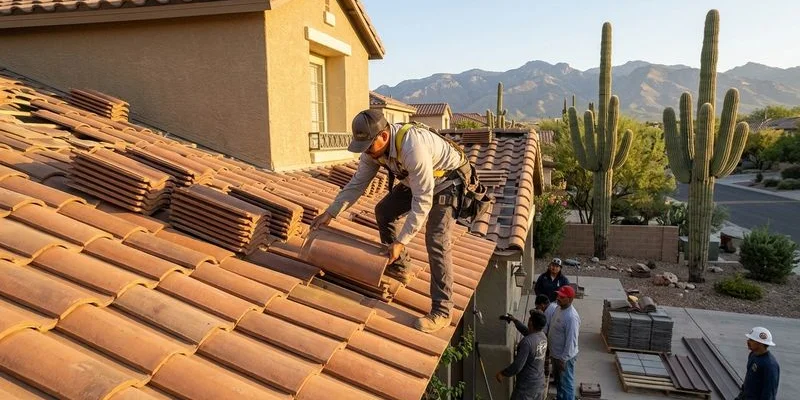
Choosing the winner in the debate of Clay vs Concrete Tile Roofing: Which Is Better for Tucson? depends entirely on your unique home, your financial budget, and your long-term real estate plans. Our experienced team at Tucson Roof Gurus has spent years installing, inspecting, and repairing both tile roofing systems across southern Arizona. You receive completely personalized recommendations based on a rigorous structural inspection of your property. Call (520) 775-0388 today for a free estimate and reliable, expert guidance.
Related Service
Learn more about our professional services related to this topic.
View Our Tile Roofing Service →
Kevin Bayes
Owner & Licensed Roofing Contractor
Owner of Tucson Roof Gurus with 25+ years of desert roofing expertise.