
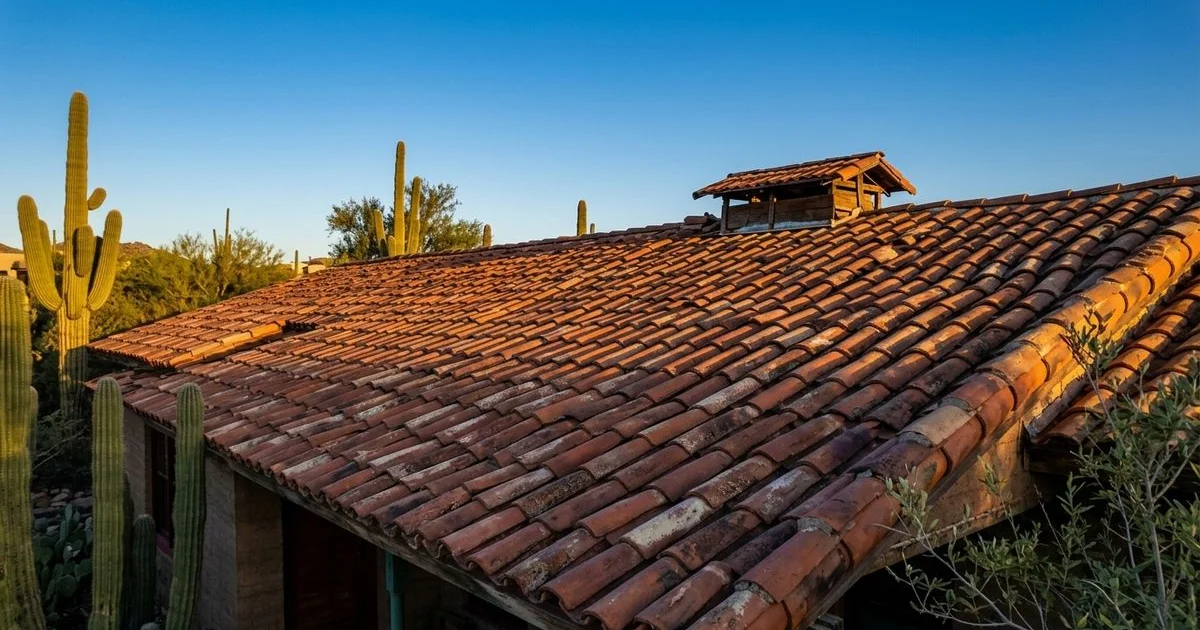
From what I observe working on homes across the valley, a beautiful exterior often hides a failing system underneath. Our team at Tucson Roof Gurus, led by Kevin Bayes, handles these exact situations daily. You might look up and see perfectly intact terracotta, assuming your house is protected for the next century.
That assumption is exactly where the most expensive water damage begins.
When clients ask us, “how long does a tile roof last in Arizona?”, this lifespan guide provides the exact answers. We are going to break down the actual timeline for these materials in the harsh sun. This data will show you what to check, what materials survive our climate, and how to avoid early replacement.
How Long Does a Tile Roof Last in Arizona? Lifespan Guide by Material
Not all overhead materials are created equal. The physical composition dictates exactly how long your house stays dry.
Clay tile stands as the undisputed champion of longevity. A properly installed clay system from a premium manufacturer like Westlake Royal Roofing can easily last 75 to 100 years. Clay is an incredibly stable material that resists UV degradation and does not break down chemically. Some of the oldest buildings in the historic Presidio district still rely on their original clay materials.
Concrete tile provides a shorter but still impressive lifespan of 40 to 60 years. Concrete absorbs more moisture than clay. This porosity combined with UV exposure causes gradual surface wear. The color coatings usually begin fading within 15 to 20 years. That chalky appearance is purely cosmetic. The heavy thermal mass of concrete blocks, weighing up to 10 pounds per square foot, actually reduces summer cooling costs by nearly 20%.
Stone-coated steel tile offers a lifespan of 40 to 70 years. Products from brands like DECRA mimic the traditional aesthetic while providing incredible impact resistance. These metal panels weigh only 1.5 pounds per square foot. That massive weight reduction means older homes do not need extra structural reinforcement to support the upgrade.
| Material Type | Average AZ Lifespan | Weight per Sq. Ft. | Best Feature |
|---|---|---|---|
| Clay | 75-100+ Years | 8-15 lbs | Extreme heat resistance |
| Concrete | 40-60 Years | 8-12 lbs | Excellent thermal mass |
| Stone-Coated Steel | 40-70 Years | 1.5 lbs | Lightweight durability |
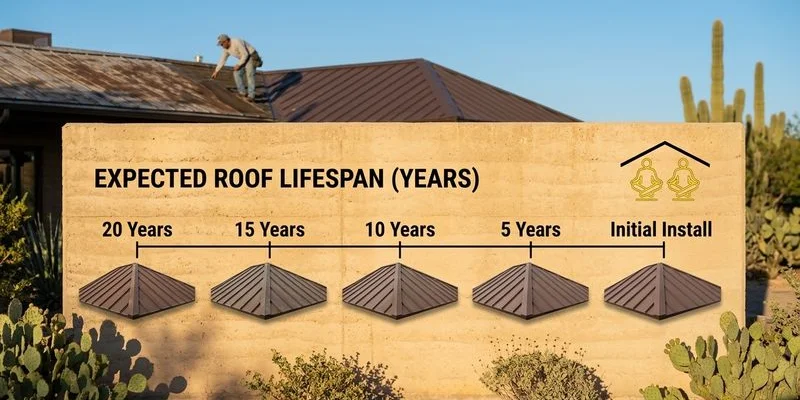
The Tile Is Only Part of the System
Here is a crucial detail that catches many property owners off guard. The outer shell might last a century, but the components beneath it certainly will not.
- Underlayment: This material acts as the true waterproof barrier resting directly on your wood decking. Traditional 30-pound felt paper was standard practice through the early 2000s. It only survives 15 to 25 years before baking into a brittle, cracked mess. Modern synthetic and SBS-modified options like Polyglass TU MAX or Boral TileSeal HT easily last 30 to 40 years. These newer materials handle extreme attic temperatures without melting or tearing.
- Flashing: Metal valleys protect the vulnerable seams around vents, chimneys, and roof transitions. Galvanized steel or aluminum valleys hold up well. The polyurethane sealants binding them deteriorate much faster, usually within 10 to 20 years. Compromised sealant leaves an open door for water during a heavy monsoon downpour.
- Pipe boots: These rubber collars create the waterproof seal around your plumbing exhaust pipes. Standard neoprene seals harden and crack within just 8 to 15 years in direct sunlight. Upgrading to lead roof jacks is a massive insider secret for desert homes. Lead completely ignores UV rays and lasts just as long as the concrete itself.
Our crews perform re-papering jobs constantly. This process involves lifting the original pieces, applying the new synthetic barrier, and putting the exact same pieces back down. Current 2026 pricing for underlayment replacement averages $10,500 to $12,500 for a typical 2,000-square-foot Tucson property.
Factors That Shorten Tile Roof Lifespan
Several environmental factors and human errors can drastically reduce the effective lifespan of your system.
Foot Traffic Damage
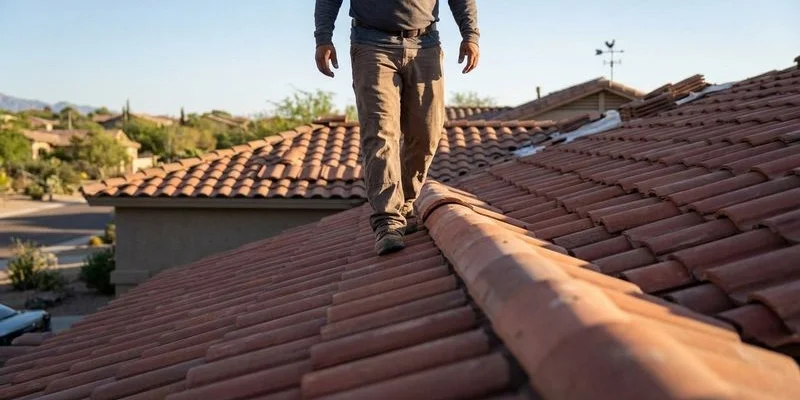
These structures simply do not handle walking well. Every single time a person steps onto your house, they risk fracturing multiple pieces. One careless solar installer or holiday light decorator can shatter dozens of pieces in minutes.
Our technicians use a very specific technique to prevent this breakage. You must step only on the bottom three inches of the piece, where it overlaps and gains support from the row below it. Always insist that any HVAC or pest control worker knows exactly how to distribute their weight properly.
Poor Installation Quality
The initial craftsmanship dictates the future of your property. Fasteners that miss the underlying battens will allow heavy monsoon winds to rip sections away. Industry standards require a minimum three-inch headlap. Each piece must overlap the one below it by exactly three inches to prevent wind-driven rain from pushing underneath.
We frequently inspect ten-year-old builds that are already failing due to sloppy workmanship. By contrast, properties from the 1980s with flawless original craftsmanship still look and perform beautifully today.
Deferred Maintenance
This is an interconnected system where one small failure triggers a chain reaction. Ignoring a single shattered piece exposes the felt paper directly to the sun. That exposed paper quickly degrades, allowing water to reach the wooden decking and cause severe dry rot.
Desert landscaping drops massive amounts of debris onto your property. Palo verde leaves, mesquite pods, and cactus needles accumulate in the metal valley pans. This debris creates tiny dams that force water sideways under the structure during the intense July and August monsoon storms.
Regular maintenance by a qualified tile roofing contractor remains the single most effective way to protect your investment.
How to Extend Your Tile Roof’s Life
Follow these specific protocols to maximize the return on your structural investment.
- Schedule strategic biannual inspections: Have a professional perform a thorough roof inspection twice a year. You need one visual check in May before the summer storms begin. The second inspection should happen in November after the extreme heat subsides.
- Address minor repairs immediately: A simple $250 fix today prevents a $5,000 deck repair next season. Prompt roof repair keeps the underlying felt completely shaded from UV rays.
- Keep valleys completely clear: Remove all organic material from the drainage channels. Clean valleys ensure water flows rapidly off the structure instead of pooling and degrading the seals.
- Restrict surface access: Minimize the number of people allowed up top. When access is mandatory for painting or solar work, hire experienced professionals who understand proper load distribution.
- Budget for the 25-year mark: If your house still has original black felt paper and is approaching its 25th birthday, start gathering estimates for a synthetic upgrade. This single proactive move secures the property for another three to four decades.
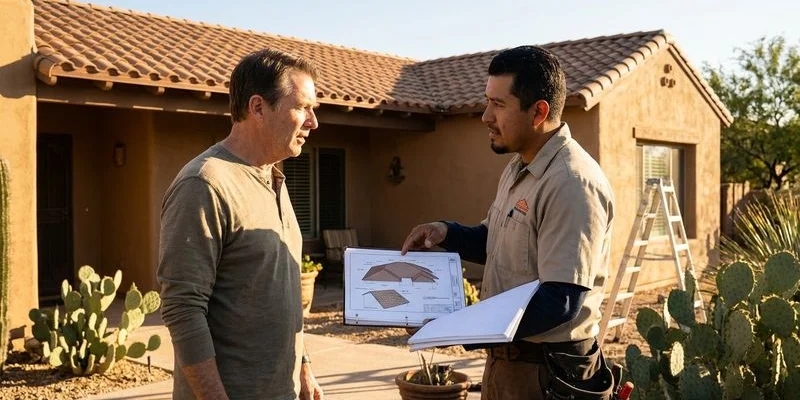
Trust Tucson’s Tile Roofing Experts
Our team at Tucson Roof Gurus can evaluate your current setup and provide absolute clarity on its condition. This highly specialized work covers everything from minor patch jobs to full synthetic underlayment upgrades. Your property requires specialized knowledge of the materials found specifically on southwestern architecture.
We specialize in tile roofing inspection, repair, and complete underlayment replacement for all materials found locally. Understanding “how long does a tile roof last in Arizona?” is the first step in our lifespan guide. The next step is taking proactive action to protect your home.
Call (520) 775-0388 today for a free evaluation. We will give you an honest breakdown of your remaining lifespan and outline the most cost-effective path forward.
Related Service
Learn more about our professional services related to this topic.
View Our Tile Roofing Service →
Kevin Bayes
Owner & Licensed Roofing Contractor
Owner of Tucson Roof Gurus with 25+ years of desert roofing expertise.