
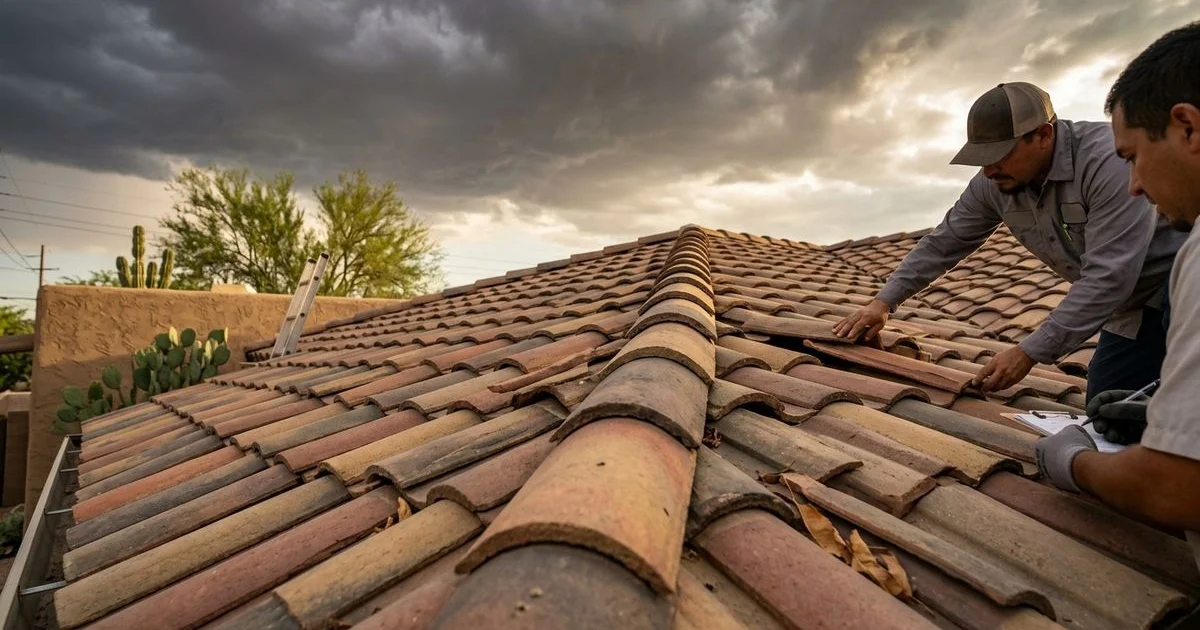
We see it every year: Tucson’s weather patterns can easily lull homeowners into a false sense of security.
The National Weather Service noted a very dry start to the 2025 monsoon season, but sudden microbursts remain a constant threat. You might not realize your system is compromised until a 60 mph wind gust exposes the weak points.
Our experienced crew, led by owner Kevin Bayes, knows your tile roofing is the primary shield against these intense, isolated storms. Catching the 6 Signs Your Tile Roof Needs Repair Before Monsoon Season is the smartest way to avoid a mid-storm ceiling leak. Let’s review the common failure points and exactly how to spot them.
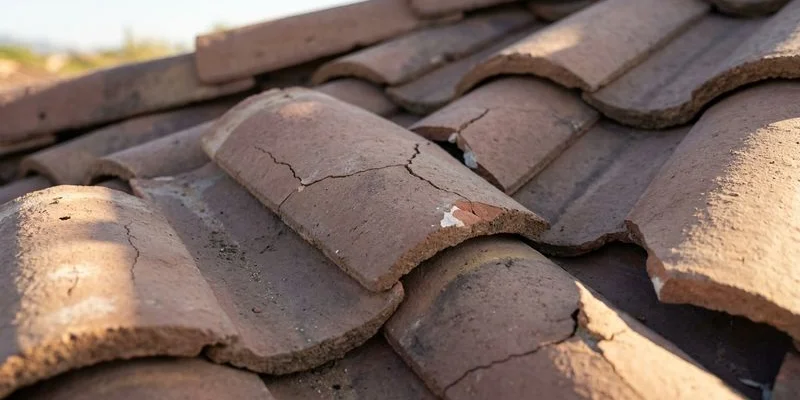
1. Cracked, Broken, or Missing Tiles
Our first recommendation is always a visual check from the ground using a pair of binoculars. Cracked or missing pieces are the most obvious indicators of trouble. Common concrete products from brands like Eagle Roofing are highly durable, but they endure severe thermal shock in Pima County.
We regularly measure summer surface temperatures exceeding 160 degrees Fahrenheit during the afternoon. Those temperatures then plummet by 40 to 60 degrees after the sun sets. This violent daily expansion and contraction cycle causes the material to weaken over time.
Our field teams classify tile damage into three specific categories:
- Hairline thermal cracks: Thin splits running down the center caused by temperature swings.
- Broken corners: Often the result of wind-blown debris or improper foot traffic.
- Slipped pieces: Wide gaps created when the underlying fastening system fails.
Even a single missing section creates a direct pathway for rainwater to reach the sensitive layer below. Cracked concrete that is still in place might seem harmless, but the material is actually quite porous.
We warn homeowners that damaged concrete acts like a sponge during a storm, soaking up water and adding hundreds of pounds of dead weight to the roof deck. If your home is older than 20 years, this trapped moisture will quickly reach the decking and rot the structural wood. Catching this early saves your underlying framing from catastrophic decay.
2. Deteriorated or Crumbling Mortar
Our crews frequently find that standard mixtures, like basic Quikrete roof mortar, dry out and crumble after years of direct UV radiation. Many properties in southern Arizona use this mortar along the ridgeline, hip lines, and transition points. This material secures the caps and prevents strong wind uplift.
We know that deteriorated ridge mortar allows wind-driven rain to penetrate beneath the caps.
Deteriorated ridge mortar doesn’t just cause leaks; it turns heavy clay caps into dangerous projectiles during 60 mph microbursts.
You can inspect your ridge line directly from the driveway. Gaps where the mixture has fallen away or appears fragmented require immediate replacement.
Our repair technicians have seen loose ridge pieces lift off entirely without solid backing. These peaks are some of the most vulnerable points on the entire structure. Localized wind gusts during summer microbursts can easily exceed 60 mph, turning these heavy pieces into safety hazards. If your property has been impacted, our storm damage team can assess and restore your system quickly.
3. Stained or Discolored Ceiling Areas
We find that many local residents do not realize they have a hidden leak until the first significant July downpour. The roof simply has not been tested by heavy rainfall in months. Brown, yellow, or gray stains on your interior ceilings indicate that water is already breaching your defenses.
Our leak detection experts recommend checking your attic space if it is safely accessible. These marks often appear gradually and might only be noticeable hours after a rain event. Even small drips that dry out between storms cause cumulative decay to the insulation.
We look for damp wood, darkened spots on the underside of the deck, and any signs of mildew.
| Stain Color | Typical Cause | Urgency Level |
|---|---|---|
| Light Yellow | Fresh, intermittent moisture | Moderate |
| Dark Brown | Long-term, recurring leak | High |
| Black or Green | Active mold and wood rot | Immediate |
The Insurance Institute for Business & Home Safety warns that delayed leak detection leads to the most expensive structural repairs. Water rarely drops straight down from the entry point.
Our team knows it often travels along rafters or pipes, sometimes showing up 10 to 15 feet away from the actual exterior hole. Waiting to see how a stain progresses will only multiply your final repair bill. Taking immediate action is the only way to protect your interior walls.
4. Sagging or Uneven Roof Lines
Our estimators suggest standing across the street from your home to evaluate the basic geometry. The ridgeline and slopes should appear straight and entirely uniform. Areas that sag, dip, or look wavy strongly suggest the underlying wooden framework is failing.
We consider this a major structural emergency that goes far beyond basic maintenance.
- Delaminated plywood decking: Caused by chronic, hidden leaks.
- Undersized rafters: Framework that cannot support heavy loads.
- Termite damage: Structural decay hidden inside the attic space.
Sagging indicates deteriorated plywood decking, damaged trusses, or severe moisture rot. A standard concrete installation weighs between 800 and 900 pounds per roofing square.
Our engineers calculate that a typical 2,000-square-foot home supports up to 18,000 pounds of dead weight overhead. When the structural wood becomes compromised by water, that massive load causes progressive failure. A dipping section will only get worse under the added weight of trapped monsoon rainwater.
We urge you to contact a professional tile roofing contractor before the clouds gather. The structural implications of a collapse are simply too high to ignore. Ignoring this warning sign puts your entire property at risk.
5. Visible Underlayment Degradation
Our removal teams frequently pull up old 30-pound felt paper on properties built in the late 1990s and early 2000s. The hard exterior pieces are only the outer layer of a complex defense system. The waterproof membrane beneath them serves as your true barrier against moisture intrusion.
The Short Lifespan of Traditional Felt
We look for exposed paper that appears dry, brittle, or torn between the gaps. This traditional asphalt material has a very limited lifespan in Pima County. According to recent 2026 local data, standard felt only lasts 12 to 18 years under the intense desert sun.
We warn homeowners that extreme thermal cycling bakes the protective oils right out of the asphalt. The Insurance Institute for Business & Home Safety confirms that high heat destroys underlayment faster than any other factor. Your exterior surface might look pristine, but the critical waterproofing underneath could be completely useless.
Upgrading to Synthetic Materials
Our crews replace this deteriorated material by carefully removing and reinstalling the original pieces in the affected area. This lift-and-relay process is labor-intensive, but it is far less costly than tearing out water-damaged drywall. Modern synthetic options provide a massive upgrade in durability.
We highly recommend SBS-modified rubberized asphalt because it actively resists UV degradation and lasts 25 to 35 years. Upgrading your barrier is the single best investment you can make for long-term protection. Securing this foundational layer guarantees peace of mind during the wettest months.
6. Debris Accumulation in Valleys and Around Penetrations
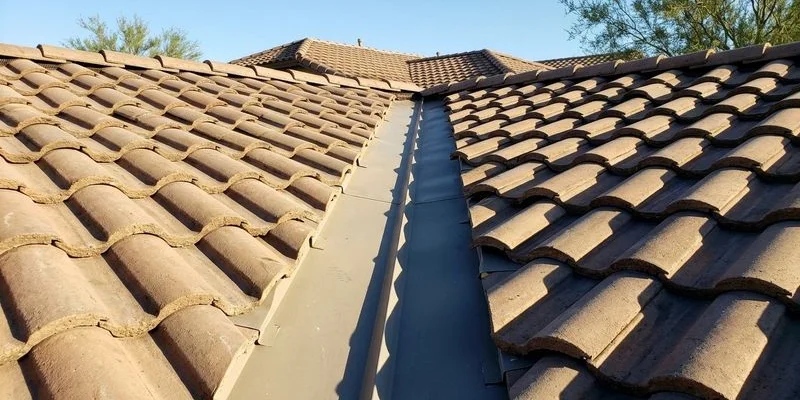
Our maintenance crews constantly pull piles of palo verde pods and mesquite leaves out of critical roof junctions. The V-shaped channels where two slopes meet are the most leak-prone areas on your home. These valleys, along with plumbing vents and chimney flashings, must remain completely clear to drain properly.
We caution clients that decaying leaves actually create a highly acidic environment.
| Debris Type | Primary Risk to Roofing |
|---|---|
| Palo Verde Pods | Block narrow drainage channels |
| Mesquite Leaves | Trap moisture and create acidic rust |
| Packrat Nests | Introduce pests and tear up underlayment |
Wind-blown dirt and packrat nesting materials also easily get wedged under the overlaps. This organic debris acts like a sponge, holding dampness directly against the sensitive metal flashings.
We know that the resulting acid slowly eats away at standard galvanized metal, causing it to rust and fail prematurely. A blocked valley forces runoff to back up and push sideways underneath the protective membrane. Clearing these blockages ensures smooth water flow during heavy downpours.
We strongly advise scheduling preventative maintenance and having these zones professionally cleaned and inspected every spring. Make sure your pipe boot seals are flexible and that all transition sealants remain pliable. Keeping the channels clear is a simple step with massive preventative benefits.
Reviewing the 6 Signs Your Tile Roof Needs Repair Before Monsoon Season & Scheduling Your Inspection
Our schedule fills up quickly, so the ideal time to book your assessment is April through early June.
You want to address these vulnerabilities before the July heat peaks and the heavy rain begins. Catching the 6 Signs Your Tile Roof Needs Repair Before Monsoon Season gives you the upper hand against the weather.
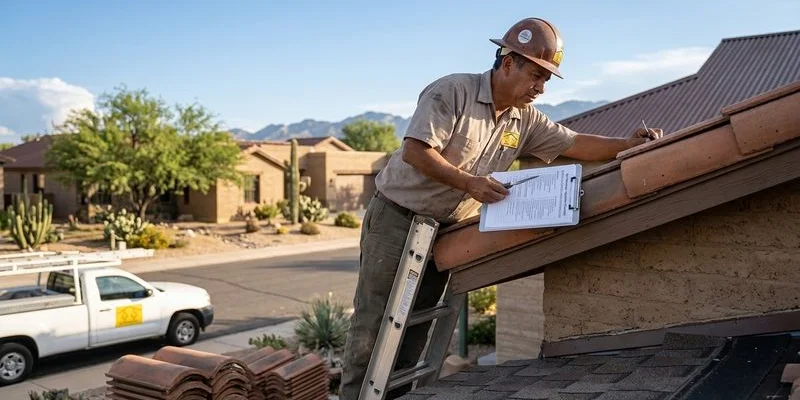
We take pride in how thoroughly Tucson Roof Gurus evaluates every single component of your tile roofing system. A professional technician will check your surface pieces, underlayment, flashing, valleys, and structural integrity. Urgent issues are always prioritized so you can secure your property while staying within your budget.
We are ready to help you prepare.
Call (520) 775-0388 today to schedule your comprehensive pre-monsoon inspection. Do not let a preventable leak turn into a costly emergency.
Related Service
Learn more about our professional services related to this topic.
View Our Tile Roofing Service →
Kevin Bayes
Owner & Licensed Roofing Contractor
Owner of Tucson Roof Gurus with 25+ years of desert roofing expertise.